Professional Voice
A professional voice is hard to define. Voice – as we learnt last week, can be used as a noun (the sound made from the mouth) or a verb (as expressed through words). This week’s lesson focuses on speech; both verbal and written so I will address both forms in attempting to define a professional voice.
I would associate a professional voice in the oral sense with qualities such as correct diction or pronunciation and clarity. A professional voice should also be able to breathe life into the words; make them come alive rather than let them sit static. Using techniques such as pausing, pitch and pace at the right time, can aid effective communication.
In general, a professional voice in the written sense would be structured, fluid or easy to follow and apply proper grammar and spelling rules. Dependant on the application, professional writing could be colourful or sterile. Although Johnson (2020) observes that professional speech is arguably less emotive and possibly more deliberate. For the most part, the criteria or components of a professional voice are subjective and depend on variables such as location, the context, but most importantly, the audience.
The audience ultimately decide whether a voice is professional or not. Certain tones and pitches, the formation of the vowels, where emphasis is placed and so on, can all have a bearing on the audience’s perception. Class, social or cultural distinctions can also dictate what is generally considered a professional voice. Although certain techniques and qualities can be associated with a professional voice, the voice alone does not necessarily make a great speaker. Johnson (2020) explains, “there is commonality in the way great speeches are written, and the way they are delivered”.
What are these commonalities? McKay (2019) wrote in an article “The 35 Greatest Speeches in History” that there are three components to great orary: style, substance, and impact. Blogger Fletcher Dean (2011) expands on this a little further suggesting there are five key components to successful speech writing:
- Audience – focus on the audience and solve their needs
- Anecdotes – a story with a point; anecdotes trump facts every time
- Structure – chronological, geographic, or numbered lists
- Don’t rely on PowerPoint – work on words first and PowerPoint second
- Edit – make it simple, clear, exciting, fresh, and engaging
Dean (2011) further commented that a successful speech is one the audience will listen and react to. “The objective is audience understanding” he said. A great speaker must know his audience; focus on what they want or need. Strong performance, charisma or passion in the subject can build audience confidence in the speaker and what they have to say. Developing a rapport with the use of anecdotes can also make the speaker more relatable to the audience and this helps build trust. When an audience is confident and trusting of a speaker, they can be persuaded.
A persuasive speaker is able to influence his audience. With this influence comes strong leadership as is marked by many of the great speakers and speeches of all time. Mahatma Gandhi, Winston Churchill even Adolf Hitler, all used persuasive communication to motivate their audience to react. Be it to inspire good or evil, a great speech delivered by a great speaker can motivate and unify masses.
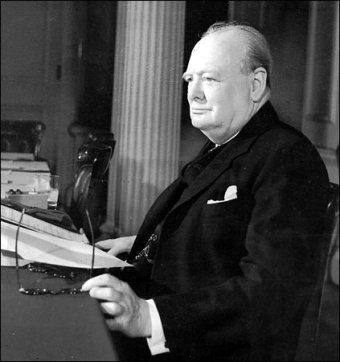
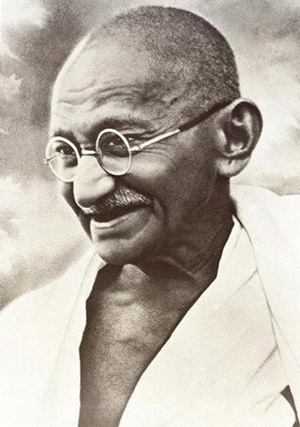
Mahatma Gandhi
Reflecting on last week’s activity, I reviewed the professional news reading of Kate Stolle (2010). I noticed that she emphasised every four or five words randomly. The words that she put emphasis on were centric to the story. When referencing Julia Gillard explaining how she would govern her party, Stolle emphasised ‘best interests’. When speaking of the Reserve Banks interest rates she emphasised ‘unchanged’. This helped the listener to focus on the pivotal points in the stories.
Comparing the professional reading to that of my own from last week’s task, there are many variants. Although I attempted to emphasis the critical words, I was more focused on the flow and pronunciation. This hampered my attempts to place emphasis in the right places. My tone changed towards the end of some of the sentences. You can hear my lack of confidence and therefore some pivotol words lacked power and weight. My delivery sounded wishy-washy as my confidence waned. There were points throughout my reading performance where I managed to fain confidence. At these points, my reading voice was quite strong. I believe I would benefit from becoming more familiar with the script, highlighting words to emphasise, and reading aloud more often. These techniques could help strengthen my confidence in my reading voice.
References
Flectcher, D 2011, 5 steps to successful speech, viewed, 25 March 2020, https://thespeechwriter.typepad.com/onspeechwriting/2011/12/5-steps-to-a-successful-speech-part-1.html
Johnson, A 2020, Week 2: Perspectives on Speech, course notes, COMM12033 Speech & Script, CQUniversity e-courses, http://moodle.cqu.edu.au/
Katestowellradio 2010, News reading sample: SBS Australia News, video, 22 September, viewed 24 March 2020, https://www.youtube.com/watch?v=6-qKDbNz2YI
McKay, B & K 2020 (2019), The greatest speeches in history, viewed 27 March 2020, https://www.artofmanliness.com/articles/the-35-greatest-speeches-in-history/
 The Scribe